12
Jun 17

The tide of life

I was searching for an analogy earlier today for the fast passage of time and it occurred to be that life is, very much, like a tide cycle.

The water comes in and that is your youth. As you grow so do your opportunities. The flat opens up for you. You can explore. You can range fare and wide until the flat itself is full of life. The peak of the tide is middle age, the height of your opportunities and possibilities. Slowly, the tide starts to go out and your opportunities shrink, your world diminishes until, at the bottom of the outgoing tide, you end up where you were in the beginning.

It works, for me, as an analogy for life and I’m not totally fooling myself when I acknowledge that I’m close to slack tide, soon, and maybe already, starting to feel the water flowing back out.

At the start of the outgoing there are still fish to be caught. Those that had used the high water to get up into the mangroves will be coming back out. There are shots to be made yet and with the experience of the incoming tide under my belt, I should have a better idea of where those shots will be.

That’s the hope, right?

That, and maybe for a little off-shore wind to slow down the outgoing tide.


04
Jun 17

Casterbating is a sin

Casting… work on it.

Casterbating – v – casting a fly line repetitively without shooting the line or adding much/any distance to the cast.

You see the fish, on your own, or with a guide, and you start casting… and you keep casting… you need a little more distance and you are letting out a foot at a time… the line is in the air and things start coming a little undone as the amount of line gets longer and longer… and then it all falls apart. You dump a bunch of unorganized line on the water. You can almost hear the fish scream as they run away. If you are fishing with a guide, you can definitely hear the guide screaming.

Many threats to bonefish come from above. So, in addition to just not really adding much to the actual cast, casterbating runs a good chance of just spooking the fish due to the arial movement.

Maybe you’ve fished with that guy. Maybe you are that guy. Condolences either way. We’ve all been there.

Casterbating is a saltwater sin, punished by the fishing gods with no delay.

How do you know if you are casterbating? Did you do more than three false casts? Yes? Then you are casterbating.

Maybe some day they’ll come up with a patch or some gum to help break you of this habit, but in the meantime, there are a few tips I have to keep you from casterbating, at least in public, in front of the fish.

  1. Starting point – How much line do you have out to begin with? If you don’t have enough line out, you wont’ be able to load the rod. It is pretty hard to load the rod with 5 feet of fly line out. You’ll usually need 15′-20′ feet of line out the tip of your fly rod in order for there to be enough fly line to properly load the rod on your first false cast.
  2. 3 and let fly – By the time you get to your third false cast, you should be shooting your line. Past that number and you hit the point of diminishing returns. It is harder to manage line in the air. The more line you have in the air, in your cast, the harder it is to maintain and control. If you have a good loop going and are properly loading the rod, by the time you get to your third cast you have everything you need to shoot the line.
  3. Don’t let go of the line. It may seem like a good idea to let go of the line with your line-hand when you shoot the line. That is not correct. Keep the line in your hand as you are shooting the line. If you keep the line in your hand you’ll be ready for action when the fly hits the water, instead of grasping (and missing) the line and trying to get everything under control. There are those times when a fish eats AS SOON AS THE FLY lands. Bonefish do this sometimes, as do tarpon. If you have the line in your hand, you are ready for business. This last tip isn’t really a casterbating tip, but it’s a pretty good one anyway.

If you can get away with two false casts, that’s better than three. Four casts is one too many and five is straight out.

You don’t need all those extra casts. They just put a greater chance for user error into the whole enterprise. They may spook the fish. You are unlikely to get a better cast on your 8th false cast than on your third. If you are casting, your fly is not in the water and you are not fishing. So… knock it off with the casterbating.


28
May 17

A tip for the Trump administration on finding leaks

OK Trump, you want to find leaks? Turn your administration inside out and fill it with water.

(Bannon says they already are)


25
May 17

There are no bonefish in Bristol Bay

Bristol Bay is about salmon and outstanding trout fishing and the wild Alaska of legend.

It’s one big flaw is a lack of bonefish. Lesser flaws include a lack of clear, warm, tropical water, a lack of palm trees and no conch.

Most bonefish aren’t even in the United States. They live, mostly, in other countries. They live in other countries with smaller economies, less robust infrastructure (which the Fyre Festival folks found out the hard way) and, in most cases, much less successful douchebags. The Bahamas, for example, are criss-crossed with ill-fated real estate ventures which spring up, only to be slowly reclaimed by the scrub after the investors have been sufficiently fleeced and the bankruptcy has been declared.

These bonefishful places tend to be tourist economies and since their main product is natural beauty, they tend not to allow their nature to be destroyed (too much) in the name of profit.

Bristol Bay is not so lucky. The Pebble Mine is again on the table, thanks to the Trump Administration.

Here is a link to the video, which won’t embed for me for some reason.

https://vimeo.com/122842334

The Video

Below is a movie put together by Mark Titus, along with some of his words. Check it out.

No Pebble Mine.

Friday, May 12th, news broke that the Trump administration paved the way for the Pebble Limited Partnership to restart its quest to dig North America’s largest open pit copper mine – directly in the headwaters of Bristol Bay’s vast wild salmon runs.

The EPA and Pebble’s settlement agreement was a backroom deal brokered between EPA Administrator Scott Pruitt and Pebble.  The EPA’s own peer-reviewed science was not taken into consideration, nor the requests from Bristol Bay’s Native Communities, fishermen, and hunters and anglers to uphold the EPA’s Proposed Determination.

Bristol Bay provides 14,000 American jobs and 1.5 billion dollars to the American economy with the 30 – 60 million wild sockeye salmon that return there each summer.

Please take action and call EPA Administrator, Scott Pruitt to tell him compromising an irreplaceable ecosystem, a fully sustainable food supply and some of the greatest sport fishing on earth is unacceptable.

The Office of EPA Administrator, Scott Pruitt:  202.564.4700

For a dive into what’s at stake in Bristol Bay, watch the award winning documentary The Breach  for the next five days for free through this link here:  THE BREACH

To take further action and to stay informed visit:  SAVE BRISTOL BAY

For the latest News:   LATEST NEWS

Join The Breach community by liking The Breach Facebook page here:

BREACH FACEBOOK

21
May 17

Home Waters – Bay Area Style

It wasn’t too long ago I was lamenting the fact there were no fish in the SF Bay Area to throw a fly at. That “fact” turned out to be pretty much wrong. See… there ARE fish to cast a fly at in the Bay (as some of you rightly pointed out).

Stripers are my new trout. The SF Bay is becoming my new Upper Sacramento River. This is my new home water.

I looked on the tide chart and then I came up with a bit of brilliance. I PUT IT ON THE CALENDAR. You know… the Google Calendar that runs my (and maybe your?) life.

At the appointed time I found myself free to leave the house, with my fishing gear, and headed out to fish.

I’m going to have to do that again.

This Bay striper fishing is not full of crashing bait and running down.. well… stripers. You go out and you put in your casts, at the appropriate tide, and you see what happens. It is a little like swinging for steelhead (in this case, most like swinging for half-pounders).

I’m loving having a bit of water that I’m getting to know… a bit of home water. It isn’t full of bonefish and tarpon, but it’s not empty either.

Thanks stripers.

Thanks for playing.


18
May 17

Joan Wulff honored by BTT

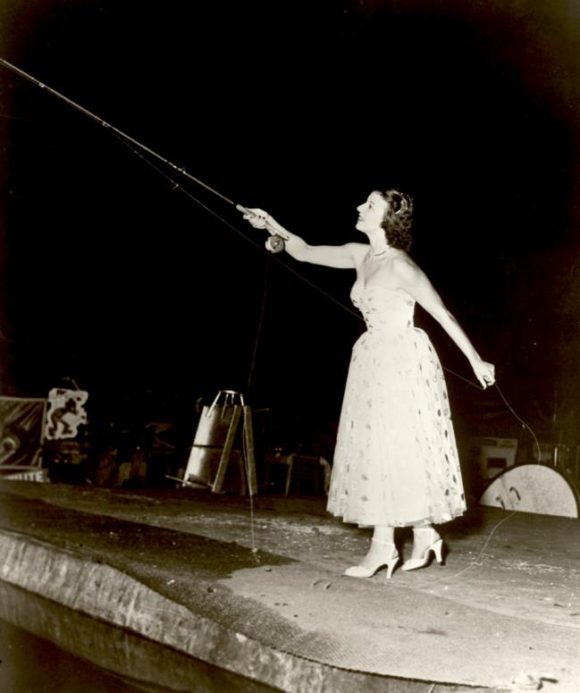
When I’m trying to explain casting in the salt to someone I often end up mentioning Joan Wulff. Most folks who are new to the salt want to muscle their cast into the wind. All they need is more brute strength, right? More cowbell.

But casting in the salt, in a 15 mile an hour wind, isn’t about muscle, it is about the proper application of power. I mention Joan Wulff, who, for all her badassery, I could surely take in an arm wrestling match. I’m stronger than she is, but she can out-cast me. Why is that?

It is about mechanics.

Joan Wulff has been an inspirational figure in the world of fly fishing. Now 90 years old, she’s been a teacher, an author or a conservationist for more years than I’ve been alive.

She was recently honored at the Bonefish & Tarpon Trust’s annual New York dinner. Pretty awesome. 


17
May 17

Speaking of… Guadeloupe!

Seems like they had fun, anyway.


16
May 17

What happens when an exploratory trip doesn’t work out?

Exploratory trips sound awesome. Wouldn’t you want to be one of those guys who were first to break the story on river tarpon or the first groups to run down the man in Baja? Of course.

But… for every Costa Rican river full of 100 pound tarpon there is probably a baking hot beach totally barren of target species.

That seems to be what played out in this film. A team goes in search of bonefish in the Gulf of Aden, found in the totally pirate free waters between Yemen and Somalia.

The movie makes one long for, well, not being there. It looks hot and the fishing looks slow. The water off the beaches gets deep quickly and while there are a couple of bonefish caught, you have to think we saw both of them in the film (as in, it seems they only caught two bonefish). There was a decent unicorn fish caught and something in a deeper cut, but mostly… mostly it just looked hot. I can feel the ball sweat just watching this.

Reminds me of hearing about an exploratory trip my friend Shane took to a South Pacific atoll. The fishing was fantastic, part of the time. The rest of the time the water was too hot and the bonefish left the lagoon, leaving precious little to go after with a fly rod. It is a long way to go to maybe find fish.

Turns out it isn’t always so bad. Here’s a video from the same waters in 2013 claiming to be the first fly caught bones on the island. Also, check out the fish at 2:13… what is that??

This trip looks way more interesting.

Such is the nature of exploration though, right? Sometimes it works and sometimes it doesn’t and sometimes those same results happen on the same waters on different days.


15
May 17

There is a lot of water out there – 9 degrees south

Yeah… this looks pretty frigging awesome.


12
May 17

Those that don’t get it will likely continue not to get it

Thanks Geneva… you continue to illustrate so many points so effectively.

This is the sort of crap that gets spouted back when you make a case against the fly fishing regs put forward by the PLP and BFFIA (Gray and Smith). Let’s delve in, shall we?

  • you can see firsthand, them attempting to have reversed the flyfishing legislation that was currently passed” – The regulations never went for a vote in the full Parliament and it is easy to see why. They would have lost. So, they cut some inside deals to get it through the Cabinet without it having to get a full airing… so, no, it wasn’t passed, it was weaseled through in the least transparent way possible.
  • afforded Bahamians rights and control of an industry in their best interest and enjoyment for Locals and Foreigners – No, the regulations intended to give control of the industry only to a few Bahamian, cut out large swaths of Bahamians and directly attacked the interests and wishes of foreign anglers (also known as the folks who, with their tourist dollars are responsible for their being a fly fishing tourist economy).
  • DO WE HAVE A SAY IN THEIR FLYFISHING LAWS? CAN WE GO IN ANY FOREIGN COUNTRY AND DO AS WE WANT? – If our laws were enacted specifically to punish Bahamian tourists, I’d expect you to have a say. If the fly fishing economy was dependent on Bahamian tourists you’d be damn sure we’d listen to input from Bahamian tourists. Also… you can come to Florida or California or Montana and, with a license, you can fish any bit of public water you want according to the regulations, which are generally set on scientific grounds. There are very, very few restrictions and no rules about training or licensing by non-governmental entities like the BFFIA.
  • That being said we must fight to ensure that the Flyfishing Legislation remains. Let your Members of Parliament, their Generals and others know that “Hell NO! It’s the People Time and the legislation is in our best interest and NOT to be touched!” – This is funny because this whole thing was rammed through PLP channels to the exclusion of pretty much any other viewpoint and it was a disaster. It alienated fly fishing tourists. It split the Bahamian fly fishing community down the middle. It was a disaster of the first order… in premise and in execution. It was also so totally partisan that you’d have to expect it to get dropped immediately with a change in leadership. Every time Gray sat in a meeting he made an enemy.

And so here are the lessons for the FNM when it comes to regulating the fly fishing industry.

  • Listen – Listen to everyone, even folks like good ole’ Prescott and his lady friend Geneva. It never felt like Gray and Prescott listened to anyone. They didn’t adopt any of the good ideas brought forward by the guides from Abaco, or the conservation leaders at the BTT or folks like Perk Perkins at Orvis. They paid lip service to listening and to collaboration and the end product was, most people would agree, a steaming pile of crap.
  • Execute in a non-partisan way – If you want regulations to last, they need to pass the smell test and be seen as not FNM or PLP regulations. Make it work. You have 5 years to make it work. Get the training done through Tourism, if you need it. Get guide licensing done, if you need it, through an independent and non-partisan entity.
  • Be clear about your aims and don’t deceive – A huge problem with the BFFIA’s approach was that there were a LOT of contradictory messages put out there. The first draft directly attacked foreign owned lodges and there were many elements of drafts that went after DIY anglers, all while being denied despite being there in black and white and being mentioned in side conversations all over the Bahamas. It all led to a real feeling that these guys couldn’t be trusted. At one point it was allll about conservation, except it never really was ever about conservation. It was always about power and economics and about control and also always in the most dodgy of ways. So… be trustworthy. Be better than what we witnessed over the past couple years.
  • There are some good ideas – Very, very few people are opposed to a license fee. It just needs to be easy to get. A guy coming in on a Friday into Marsh Harbor has a hard time getting a license when the Administrator’s office closes at 1:00 and won’t be open until Monday. Is that guy supposed to not fish over the weekend? Of course not. So, take the good parts and make them work. A fund for conservation? Great. Just don’t have the money go to Prescott’s sham of a nonprofit. Limits on mother-ship operations? 95% of anglers would get behind that, but don’t make it illegal for a guy to take out his buddy when he’s paid to get his boat in the country, bought a home and put tens or hundreds of thousands of dollars into the Bahamian economy.

I look forward to seeing where things go. I’m optimistic, which is something I haven’t been able to say about the Bahamas for a couple years.