02
Oct 15

The Drake’s Take

A great satirical look at the Bahamas situation came out in The Drake’s on-line incarnation. I feel honored to have been mentioned for the small role I’ve helped play in keeping people informed.

One of the humorous items on the list was:

6) DIY angling still allowed, but only in two Designated DIY Zones: Swimming Pig Beach on Great Exuma, and Stingray Lagoon at the Atlantis Resort. DIY anglers must fish standing on one foot, wearing only a banana hammock, while singing “March on, Bahamaland.”

See, that’s funny because it sounds a lot like the Unguided Angler areas proposed by our pals over at the BFFIA.

It seems on the surface of things that they are not going to get their way with their long list of power-grabbing proposals. At least, ya know… on the surface.

So... is this it?

So… is this it?

Recently, a Department of Marine Resouces spokesperson had this to say:

“It was also noted that there are persons and companies that offer accommodations throughout the Bahamas who cater specifically to DIY fishers. Given the significance of the DIY portion of the sector, the management measures being contemplated now will require these fishers to obtain a personal license to engage in flats fishing, provide access by these fishers to all fishing flats except those under special management, and also ensure that DIY fishers have the latest information with regard to catch and release methods and fishing etiquette in the Bahamas.”

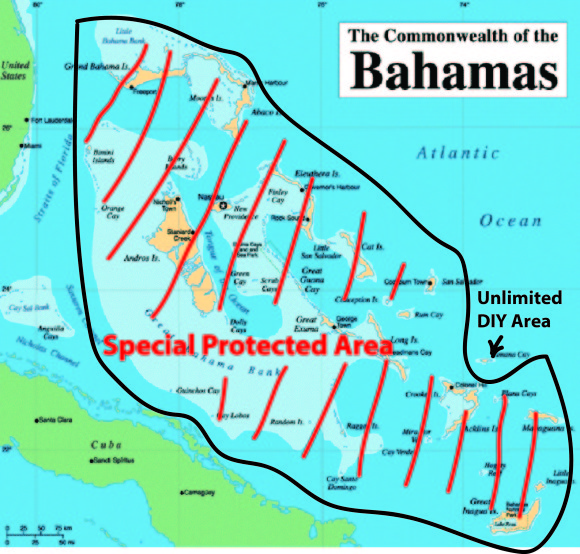
See… that sounded pretty good at first glance, but I wasn’t the only one to wonder “So, what are these special management areas?”

Is that pre-spawn aggregation points or is that every easily accessible flat on Long Island, Acklins, Crooked, Eluthera and Cat? Basically, is this the Unguided Angler areas in different packaging? Maybe this is everywhere but good ole Singray Lagoon, more or less.

The warm cozy feelings are being replaced by the paranoid questionings as I’m starting to really want to see a map of what they are talking about.

What do you think? Am I being paranoid here?


29
Sep 15

Interview with Justin Lewis from BTT

As hard as it is to believe, I actually asked these questions of Justin Lewis from Bonefish & Tarpon Trust before all this Bahamas regulation stuff came up.

Justin works for BTT. He’s a Bahamian working in the Bahamas for BTT. Shows BTT’s commitment to protecting bonefish where bonefish live. I applaud that up and down and am only sorry I have but two hands to applaud with. See… BTT is awesome.
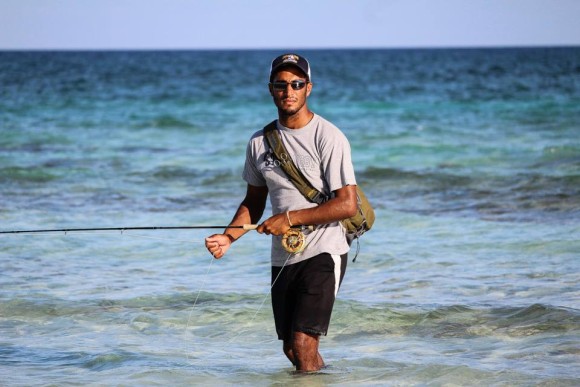
Justin Lewis in the Bahamas

Justin Lewis in the Bahamas


You are working with BTT out in the Bahamas. Can you give me an overview of what that work entails?

Working as the Bahamas Initiative Manager for the BTT, I travel around the Bahamas visiting lodges and working with local guides which has helped us identify bonefish home ranges, juvenile habitat, bonefish spawning sites, and bonefish spawning migration pathways. The Bahamas Initiative is a collaborative, multi-year program to conserve and protect the bonefish fishery and their habits in The Bahamas.


The work I do when I travel to the different islands ranges from giving presentations to guides, anglers and schools, to tagging, to snorkeling with thousands of bonefish in pre-spawning aggregations. The scientific information we collect is then applied to habitat conservation plans in conjunction with fishing guides, lodge owners, collaborating NGO’s, and the Bahamas Government.
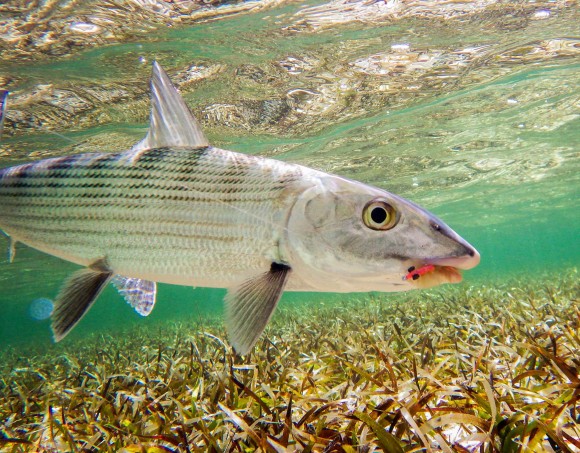
 

Nice fish from Justin.

Nice fish from Justin.

What is one thing you wish anglers knew about conservation.

The one thing I wish anglers knew about conservation is how much they are capable and welcome of getting involved in conservation efforts. For the work we do at BTT, angler and guide participation is key to the success of many of our projects. For example, our tag-recapture study in the Bahamas involved a lot of angler and guide participation. From anglers and guides tagging bonefish and reporting recaptures we were able to figure out that bonefish have very small home ranges (<1km), and also travel long distances (>30km) for spawning purposes. By anglers participating in research like the tagging program, the information they help collect is vital to conservation efforts and planning for bonefish and their habitats. It is also a great way to give back to the resource we have such a passion for.


The BTT in collaboration with Florida Fish and Wildlife Commission has initiated a new genetics study looking at the connectivity of bonefish and tarpon populations in the Bahamas, Caribbean, and Western Atlantic. We collect fin clips from bonefish and scales from tarpon that are used for genetic analysis, and can help us determine whether different populations are related to one another. If anglers or guides who target bonefish or tarpon in those areas are interested in participating in this study, they can request a fin clip or scale sample kit by contacting us at info@bonefishtarpontrust.org.
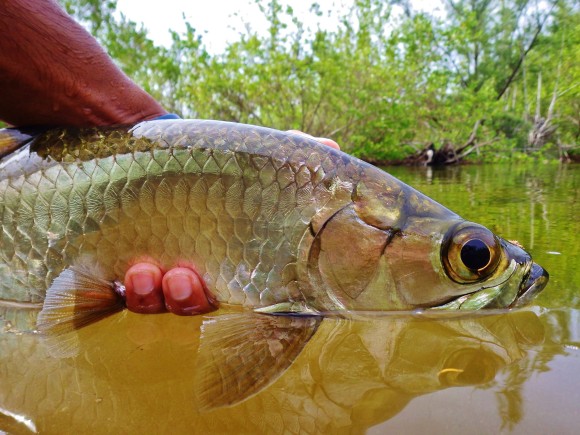
A baby poon, Bahamas style.

A baby poon, Bahamas style.

What’s one unexpected thing you’ve see out there on the flats?

On a flat in Eleuthera, I saw a very large porcupine fish. I’ve seen them countless times out on the reef, but never thought I’d ever see one on the flats.

What do you think is the biggest threat to Bahamian bonefish?

We have identified habitat loss and degradation to be the greatest threat to bonefish populations in the Bahamas. Lots of areas that are prime feeding and spawning habitat for bonefish are also sought after by developers for sand mining or hotel and marina developments. Removing or altering habitat could negatively affect a local bonefish population that depends on habitats like mangroves and seagrass beds for food and cover.

How good is the Bahamian rugby team? And please explain how to play rugby. (I admit I asked this question to be funny, but Justin just went ahead and answered it anyway)

We are a good team and have a lot of talent, but we still have things we need to improve on. We had a good international season this year, beating both Bermuda and Turks & Caicos.
Rugby is a continuous game whereby two teams carry, pass, kick and ground the ball in order to score. In rugby there are 15 people playing at a time per side. The key to playing rugby is that you always have to pass the ball backwards, and to be in support of the man with ball in order to receive a pass or ruck in order to secure the ball. The purpose of the ruck or maul is so that the game can continue without any stoppage in play. The line-out and scrum are two key distinguishing factors to the game of Rugby Union. A scrum occurs when there is an accidental infringement and a line-out occurs when the ball goes out of bounds. A try is scored when a player places the ball in the opposition’s in-goal area, and is worth 5 points followed by a conversion kick which is worth 2.

On an average day of bonefishing, average conditions, what fly are you pulling out for your first cast?

Well that all depends on the area I am fishing. My go-to fly for most situations is a simple crab pattern, most of the time a merkin or bastard crab that will match the bottom I am fishing. The two keys to choosing the right crab pattern is weight and color. Match the weight of the fly to the depth of water you are fishing, and as I already mentioned match the color of the crab fly to the bottom. Most of the time crabs will take on the color of the bottom they are on. Crabs have a very high caloric value which bonefish love, so to heighten your chances of getting one to look and hopefully eat, I’d recommend a crab fly.

If you were writing the laws in the Bahamas and could enact one law to help the fishery stay healthy, what law would you enact?

If there was one law I could enact, it would be the protection of key bonefish habitat from unsustainable development. From the research BTT and our collaborators have done over the years on bonefish, we have come to the conclusion that degradation, blockage, and removal of bonefish habitat is the greatest threat to the species.


One other law I would enact is total ban of gill nets. They are a non-selective and extremely destructive type of fishing, and if they get lost and float at sea or get stuck in mangroves, they can cause even more destruction by entangling any marine organism that gets near it.

Thanks Justin!

25
Sep 15

Light on the Horizon in the Bahamas

Andros South in the morning.

Andros South in the morning.

Well… this certainly looks like good news.

The Department of Marine Resources has come out and alleviated a lot of the fear around what these regulations might look like. It indicates a lot of wheeling and dealing going on behind the scenes to scrub the most offensive parts of this thing.

DIY is safe.

You’ll need a license.

Guides will be licensed.

Mother ships will continue to be regulated by other laws (even though most people were fine with that going away).

None of that “Unguided Angler Permitted Area” stuff.

No power consolidation in the BFFIA.

Can you hear the collective sigh of relief? I can hear it from all the way in California.

So, don’t cancel that trip. Don’t boycott the Bahamas. No need to get any more worked up over what some of those guys wanted to do. They aren’t going to be able to do any of it.

It appears right now, that the Bahamas might just be saved.


24
Sep 15

Thar be monsters!

This was posted up by Jean Baptiste Vidal over on Facebook. That is a truly large bonefish, a 14 pounder.

This fish was caught in New Caledonia, which has been one of those “big fish” locations people talk about. From what I hear it is a low numbers, big size place, as all big fish locations seem to be.

What a fish.

I mean... wow.

I mean… wow.

One hell of a fish there Jean! Congrats!


16
Sep 15

Prospects

As I look out at the life and work commitments through the end of 2015 I see no daylight for the long rod.

Fall used to be just about my favorite time to fish. The fish seemed hungry, the rivers were emptying of people as either college football or the NFL took up weekends for people less interested in trout than I was.

Purty

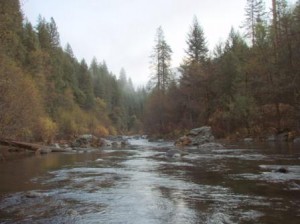
The McCloud. Closing. Where I am not.

The threat of cold fronts or hurricanes has mostly kept me from looking to the flats, although I know the fish are still there, still eating and maybe seeing less pressure now than in April or May.

Now, however, now I see no possibilities. I’m back to mostly weekends with my daughter during the school year, so I can’t go wander around my rivers whenever I want. There is also the wife and the boy to think about as well.

Later in November and December it is conference time in my world. Nephrology in San Diego and Hematology in Orlando (let me know if you are going to be there). There is prep for those conferences and then follow-up and the Holidays.

The fishing? I don’t know where it fits in. Not like I live in Miami. Not like I can really just go fishing without preparation and airfare and hotels and gathering of gear and intel.

It seems like there a couple of sweet spots both younger than I am now and older than I am now where the fishing prospects are bright. Now… now I just get to look at the pictures and read the stories and think about where I’m going to go in 2016 when I’ll get back out on the water again.


09
Sep 15

A float on the Kootenai

My dad and I (my dad came along on the trip as we are forging some new traditions these days) had a trip with Linehan Outfitting Company over on the Kootenai, of which the Yaak is a tributary. We met Sean and headed to the dam on the Kootenai. First stop was to look at the fish just out of range, above the bridge that designates the fishable water. Sitting there were a few Bull Trout well above 25″, as well as several rainbows ranging from 6″ to 24″. So… there were fish in the river, of size.

A big river

A big river

We had a choice. Cover a lot of water and rack up some numbers. The “bread and butter” fish here is about 12″ and you can put a lot of them on the scorecard if you want to do that. We went another route. We put me on the streamer rig (about 7″ long and heavily weighted) and went after the big fish.

Shortly after starting our drift we went right over a rainbow that had to be over 30″.

I didn’t catch it.

I didn’t catch much of anything on the streamer, as it turned out, but I knew that was a risk going in. Sean had nice things to say about my casting and about my sticking with things. I managed to catch one pike minnow and hooked and lost a bull trout. The water was so clear you could see at least 30 feet in the water and I saw the bull chomping on the fly. He came unbuttoned and that was the only bull I had eat.

I switched over to dry/dropper and nymphs and picked up a few fish in the last mile or so of the drift. My dad ended up as top rod, but not by much.

SMILE!

SMILE!

The Kootenai is a cool river, a big, broad river, a river without much traffic on it and a river that stayed cool throughout the hot, parched Montana summer.

I’ll be back next year, and I’ll be rigged for the big boys (and girls). Those fish are stuck in my head.

Reminds me a bit of tarpon fishing. You see the fish, you know they are there, sometimes they eat, and sometimes they don’t.


08
Sep 15

Labor Day Vacation in NW Montana

We almost didn’t go. Smoke was thick up on the Yaak and my wife’s asthma was going to nix the trip, but the smoke blew away, as smoke does, and the trip was back on.

Instead of smoke, our week up on the Yaak River in NW Montana was accompanied mostly by clouds, a bit of rain, and cooler temps. That did put a little bit of a kabosh on the fishing, but there were still some highlights.

This corner of Montana doesn’t get written up too much and people don’t find themselves up here by accident. It isn’t really on the way to anything, or from anything, it is just up there all on its own. People have to head here on purpose.

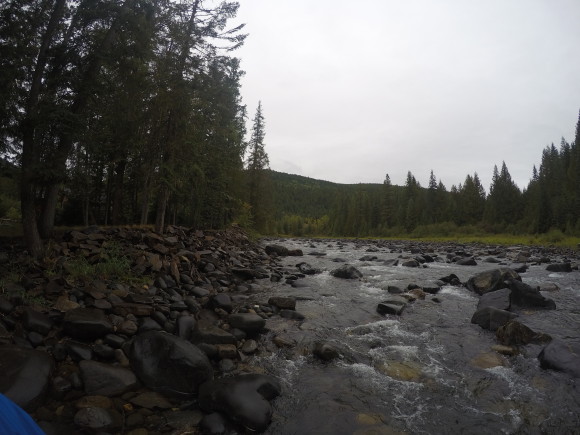
My in-laws live on the Yaak, a pretty little free-stone with loads of trout in it. Loads and loads of tiny, little, finicky, temperamental, temperature sensitive trout.  I never seem to get to look at this river when it has water in it. I’ve seen it in December, when most of the water is frozen up in the mountains. I’ve seen it in September when all that water is mostly through the drainage (no dams on Yaak). They float this river in the Spring, but you’d have trouble getting an inner-tube down it in September.

Dark skies, cloudy, cool weather.

Dark skies, cloudy, cool weather.

The picture above was me getting mostly worked by the Yaak. So much good water, water that hadn’t been touched in a long, long time, and had nothing in it interested in eating. It seems when the cooler temps hit the water, the fish just shut their mouths. I caught fish, but if things were going well it would have been fish after fish after fish. I’ve seen that happen here, just not this year.

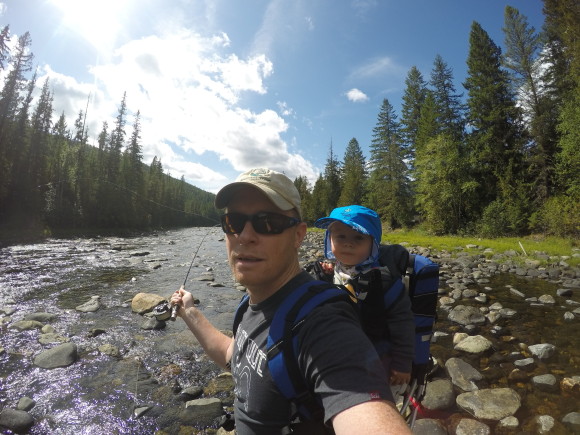
I did stick some fish on the river, even got my son out in the backpack to do some fishing on one of the decent weather days.

The boy in the backpack... good stuff.

The boy in the backpack… good stuff.

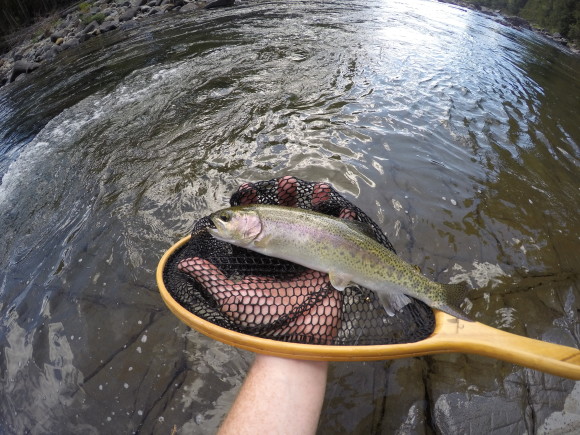
The Yaak does have trout, this is a big one for that bit of water.

The Yaak does have trout, this is a big one for that bit of water.

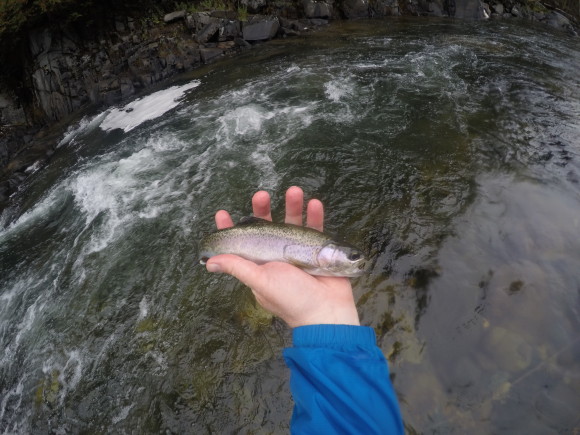
That fish is from riiiiiiight there.

That fish is from riiiiiiight there.

On his way.

On his way.

It is pretty pretty up there.

It is pretty pretty up there.


Other stories, coming soon…

  • My daughter, again, crushes 20 trout on a little creek.
  • My dad and I float the Kootenai
  • I get my wife out fishing (rules to follow were 1. no wet feet, 2. she didn’t have to touch the fish)


28
Aug 15

Damning

The MidCurrent story, both I & II are getting a lot of eyeballs. There are probably more comments on those two stories than all the stories I’ve written about the topic. It speaks to the authority MidCurrent has as a brand.

If you are still on the fence… I think these comments by our pal Prescott Smith about the Bonefish & Tarpon Trust really should help you pick a side. This is from the MidCurrent story:

BFFIA president Prescott Smith, who argues that BTT resists local input and is out of touch with ordinary Bahamians, says that BFFIA has no relationship with BTT now and no plans to work with the group on common cause conservation concerns in the future. Instead BFFIA works closely with Bahamas Sportfishing Conservation Association (BSCA), which Smith himself began in 1995 to address conservation issues he believed were of particular importance to Bahamians. According to Smith, BSCA has approximately 250 members; a request for the number of members with fisheries science backgrounds and/or advanced degrees in marine resources or natural resources management went unanswered. In any case, Smith asserts that locals know more about local fish behavior and patterns than do experts who visit the islands for a few months for programs like bonefish tagging.

Really?

Just to be clear… THIS is the organization Prescott won’t work with (and by the way, that is what actual conservation work looks like).

It is unclear if Prescott knew BTT has a Bahamian staff member, living in Grand Bahama, working every day on conservation issues (not weekends, really, working 5 days a week), getting in touch with ordinary Bahamians.

Instead of working with and supporting a world-class conservation organization like BTT, Prescott will only work with an organization he himself started and controls. This is the organization he’s talking about. Last news update on the website was from 2013. There is no list of staff. There is no list of partners or funders. Their facebook page was last updated in 2013. There is a Twitter account, started in 2008 with zero tweets. It is a ghost of an organization.

Incidently, this nearly non-existant entity is the only “Industry Partner” listed on the BFFIA’s website.

These are the partners of the Bonefish & Tarpon Trust.

Which organization would a rational person choose to partner with I wonder?

I mean… is anyone still buying this stuff?

BTT & the Bahamas... they go well together.

BTT & the Bahamas… they go well together.


23
Aug 15

The best comments thread anywhere is on MidCurrent

One of the bones of 2014

One of the bones of 2014

The MidCurrent story on the Bahamas stuff was interesting, sure, but the comments… the comments are pure gold. You simply have to read this stuff, especially the very well reasoned and level-headed responses from Stephen Vletas (author, along with his wife, of The Bahamas Fly Fishing Guide).

I can’t do any better than he did… and I mean, I really can’t. He knows the history because he was part of it and his even-tempered replies are just fantastic reading.

You MUST READ THIS

I’m not so good at remaining civil in the face of the rhetoric. It’s a shortcoming of mine. Give me another 40 years and maybe I’ll make some headway on that. Stephen Vletas is the voice of reason that I sometimes am not. Read it. Now. Go ahead. I’ll wait here.


22
Aug 15

The blog turns 6

I started the blog on my birthday in 2009. Since I had another birthday on Friday that means the blog had a birthday too. Six years of Bonefish on the Brain.

Nice fish.

Nice fish.

As of late it is all about the Bahamas, but bonefishing is something that spans certain latitudes around the globe. The Pacific, the Caribbean, the Indian Ocean, even the Gulf of Oman and Persian Gulf have, so I’ve heard, bonefish.

Bonefishing is also about a lot more than just the fish. There are places and people to get acquainted with. There are drinks to be had, meals to be eaten. There are a whole bunch of fish you encounter out there on the flats as well. If you have love of bonefish, you likely also love tarpon and permit and jacks and cudas, I know I do (except permit, permit are jerks). Spoon bills and osprey and sharks, dolphin, turtles… so much to see and experience and I kind of love it all.

When I look on the facebook page for the blog it is very noticeable how many profile pictures have a fish in them (most). That always lets me know “these are my people,” even if my profile pic is of me and my son at the moment.

Bonefishing is about a lot of things to a lot of people. For me it is about the first moment of recognition, when the undulating pattern of water over sand materializes into a bonefish or a string of bonefish and you know you are about to get a shot. I love that moment. It is my favorite fly-rod-related feeling.

Thanks for sharing your moments with me and for allowing me to share mine with you.

Here’s to six more years.